In my assessment, Kent County’s commissioner race is too close to call. A substantial number of mail-in ballots remain uncounted—enough to significantly change the current standings. Provisional ballots and additional eligible mail-in arrivals could also affect the results. The candidates currently leading may remain ahead, but the available numbers do not establish the final winners. There may be a more official update as early as Friday, November 6.
Throughout this campaign, I committed to helping residents understand the public processes that affect our county, including how we fund our schools and make decisions about public spending. That commitment also applies to explaining the election process.
Since Tuesday evening, I have heard from residents who are waiting for the remaining ballots and others who believe the race is already settled. I understand the uncertainty–people want to know where things stand and when we will know more.
I am not a political analyst or an election administrator. I am a candidate who values clear communication. Here is what I have learned from the available election records and Maryland’s published guidance.
Where the commissioner race stands
The Maryland State Board of Elections’ Kent County results page, last refreshed at 9:21 a.m. on November 4, reports the following:
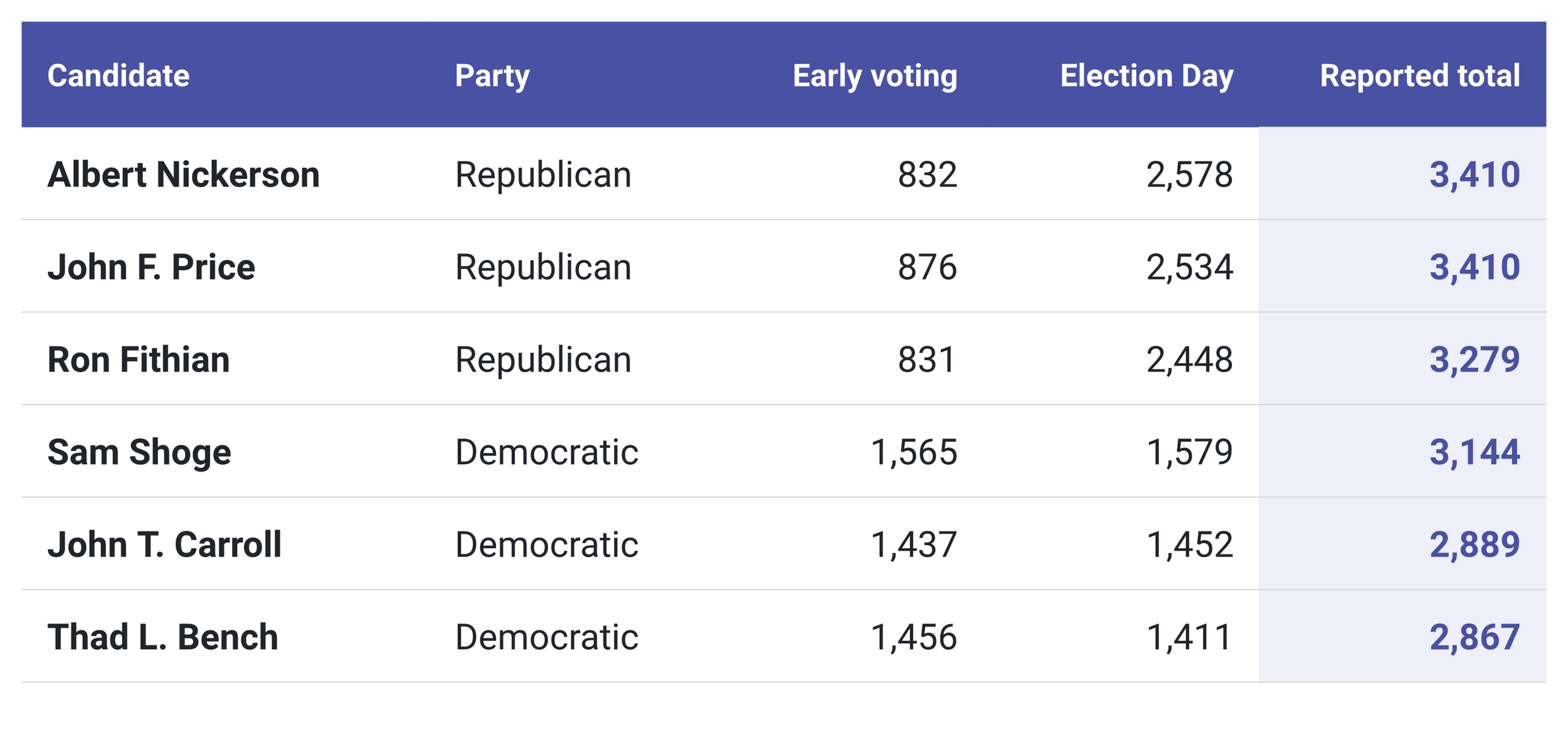
All 10 Election Day precincts have reported, but the mail-in and provisional columns remain marked “not reported.” The difference between third and fourth place is just 135 votes! These results are unofficial.
Residents could vote for up to three commissioner candidates, but they were not obligated to choose three. They could select just one or two candidates. One ballot can therefore contribute votes to multiple candidates, including candidates from different parties. Candidate vote totals should not be confused with the number of people who voted.
How many mail-in ballots remain?
The state’s mail-in ballot report, labeled November 3 at 6 p.m., provides this snapshot for Kent County:
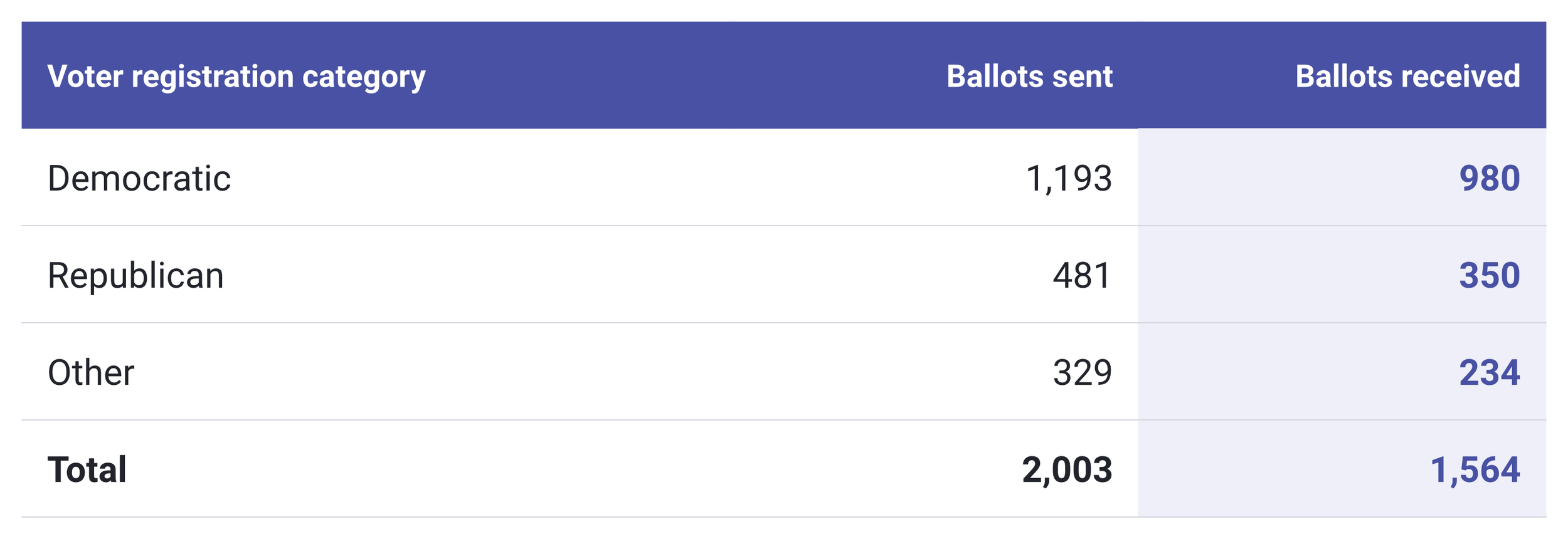
The corresponding state report lists 1,564 mail-in ballots left to count.
“Other” combines voters outside the Democratic and Republican registration categories. That includes unaffiliated voters, often called independents, and voters with other party affiliations, such as Green or Libertarian. It does not mean that all 234 ballots came from unaffiliated voters.
These figures are a snapshot. Additional ballots mailed by the deadline may still arrive, and received ballots must meet the requirements for counting. The registration breakdown may also change.
As a reminder, party registration does not tell us how someone voted. Voters may select candidates from either party, split their choices between parties, or vote for fewer than three candidates.
How this compares with previous commissioner elections
To put those numbers in context, I reviewed Maryland’s final mail-in ballot reports for 2014, 2018, and 2022, along with the provisional ballot reports for those same 2014, 2018, and 2022 elections.
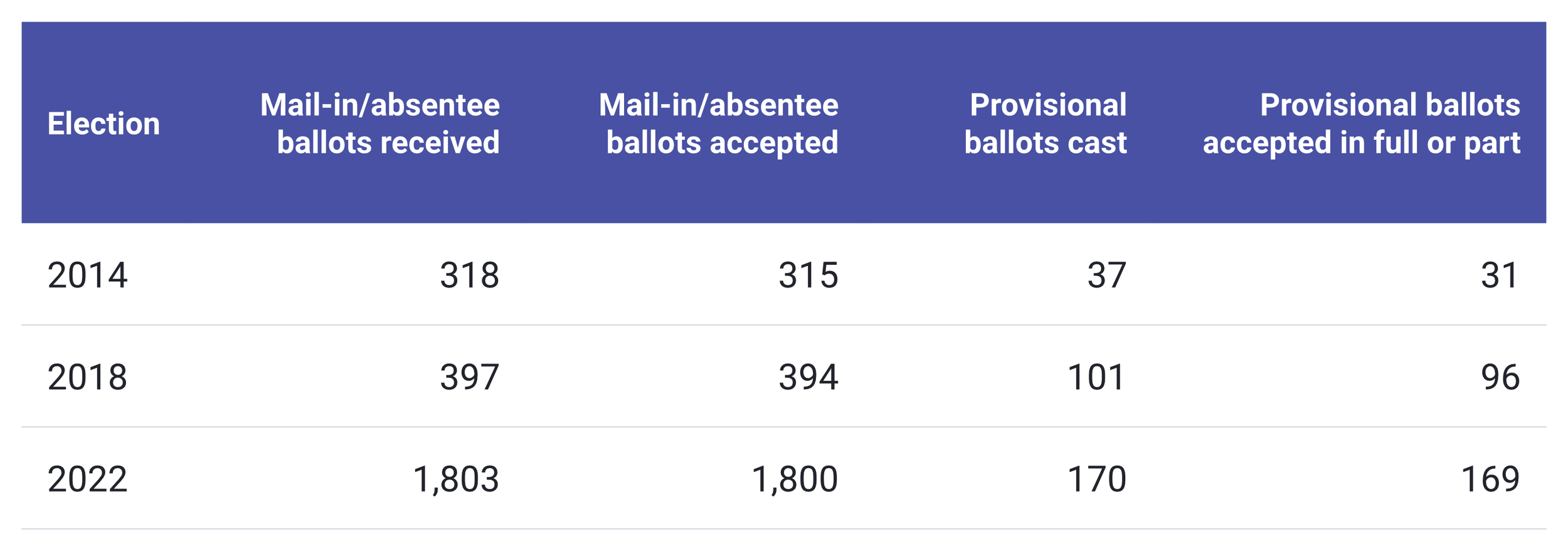
“Absentee” is the older term used in these reports for mail-in voting. These historical figures are final counts; this year’s figures remain incomplete.
Across those three elections, Kent County averaged approximately 103 provisional ballots cast, with approximately 99 accepted in full or part. That gives us some context, but it does not tell us how many provisional ballots were cast this year. A ballot accepted in part also does not necessarily contain a countable vote in the commissioner contest.
Why mail-in voting increased
The increase followed both the pandemic and changes in Maryland law. During the 2020 election, Maryland encouraged mail-in voting because of COVID-19 and sent mail-in ballot applications to eligible voters.
In 2021, Maryland established a permanent mail-in ballot list and requirements for ballot drop boxes. The permanent list allows voters to request ballots for future eligible elections without submitting a new request each time. The legislation also required application mailings before the 2022 and 2024 statewide primaries, subject to its provisions.
The State Board of Elections’ 2022 report explains that thousands of people who first voted by mail in 2020 continued doing so in 2022. Statewide, mail-in voting accounted for almost 27% of participation in the 2022 general election, compared with roughly 5% to 6% before 2020.
Those changes help explain why mail-in ballots now represent a much larger part of the count. The records do not tell us how much of Kent County’s increase came from any single factor.
The voting patterns behind the changing count
Kent County has a recent pattern of more Democrats voting early or by mail, while more Republicans vote on Election Day.
The 2018 county turnout records recorded 1,613 Democrats and 990 Republicans voting early, and 212 Democrats and 117 Republicans voting absentee. Election Day participation was slightly higher among Republicans: 2,302, compared with 2,271 Democrats.
That difference became more pronounced in the 2022 records:
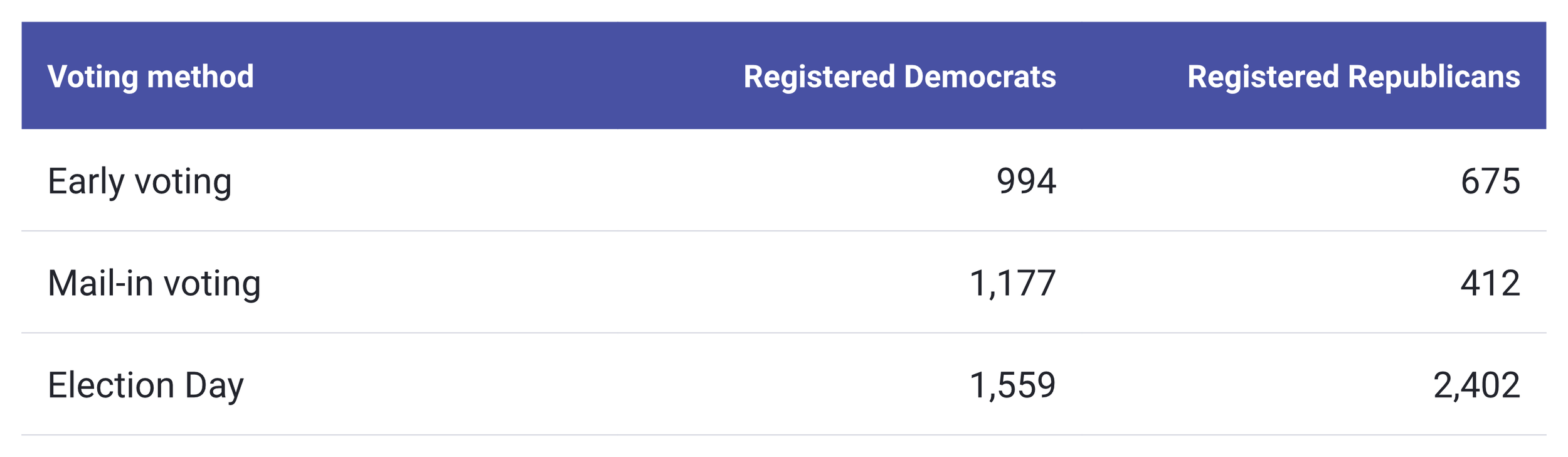
This year, the early-voting report records 1,358 Democrats and 823 Republicans, and the mail-in snapshot above shows more Democratic than Republican returns. The commissioner results also show each Democratic candidate receiving more early votes than each Republican candidate, while each Republican received more Election Day votes than each Democrat. Candidate votes, however, are different from voters’ registration.
National research shows a similar difference for mail-in and Election Day voting. Pew Research Center found that in 2024, 44% of Democratic voters reported voting by mail, compared with 26% of Republicans. Republicans were more likely to vote on Election Day: 39%, compared with 28% of Democrats. Early in-person voting differed from Kent County’s pattern: nationally, Republicans reported using it more often than Democrats.
These are observations about voting methods. They explain why a later count can look different from an earlier one, but they do not tell us who will win.
Why the remaining ballots matter
There are 135 votes between third and fourth place, and the available state report lists 1,564 mail-in ballots still to count. I do not yet have a verified current count of provisional ballots.
That is enough outstanding voting to substantially change the order of the candidates. It does not, however, mean the order necessarily will change.
The current leaders may remain ahead, or the remaining count may produce different winners. Neither the current standings nor the registration balance among returned ballots guarantees the outcome.
No candidate should treat the current standings as confirmation of victory. All of us are waiting for the remaining eligible ballots to be counted.
What actually happens to those ballots?
This is the question I am hearing most often: Where are the ballots, who counts them, and why does the process take time?
Based on my review of Maryland’s published guidance, here is what I have been able to piece together. I am not an election judge or an election administrator; this is my explanation of the process described by the officials responsible for it.
Mail-in ballots return to the appropriate local board of elections. For Kent County voters, the review and counting take place through the county’s election administration.
Before counting a mail-in ballot, election workers check whether it was returned on time and whether the voter signed the required oath. If the oath is missing a signature, the local board attempts to contact the voter so the voter can provide it by the deadline.
During counting sessions, called canvasses, teams review envelopes and ballots under the local board’s supervision. They open qualifying envelopes, remove the ballots, and check that the ballots can be scanned and the voter’s choices are clear. Questions requiring a decision go to the board. Maryland’s canvassing guidance explains these steps.
Provisional ballots need an additional eligibility review. For example, someone who requested a mail-in ballot but later voted in person may have voted provisionally. Officials must establish whether that person’s mail-in ballot was also returned before deciding whether the provisional ballot can count.
These reviews take time because officials must determine which ballots qualify and prevent a person’s vote from being counted twice. Maryland’s guidance also makes clear that eligible provisional ballots count even if they will not change the outcome.
When should residents expect more complete results?
Maryland permits mailed ballots to be postmarked on Election Day and received afterward within the state’s deadline. Ballots returned by hand or deposited in a drop box had to be delivered by 8 p.m. on November 3.
The state’s 2026 election calendar lists these next steps:
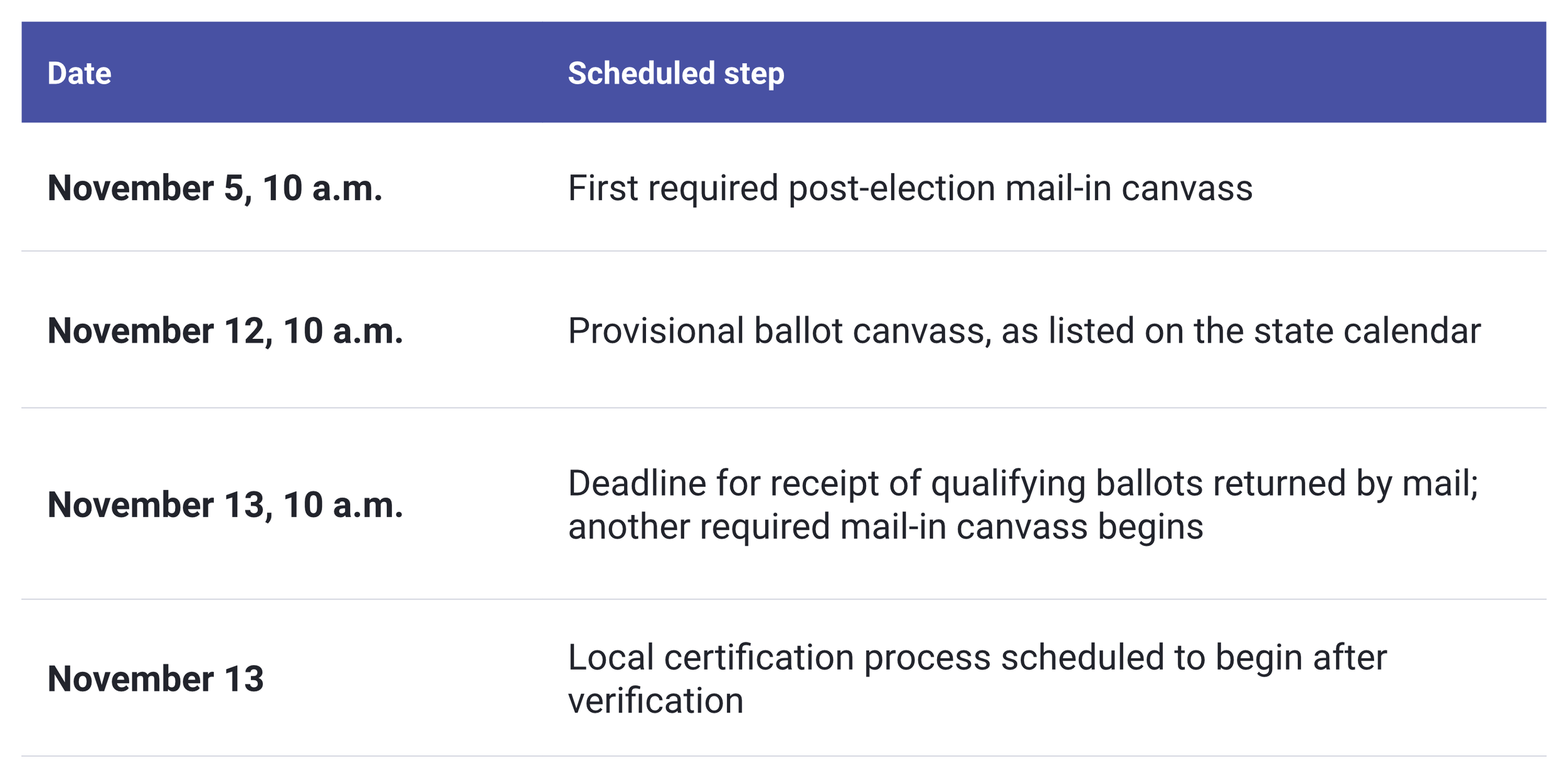
The extended mail deadline applies to qualifying ballots with a proper Election Day-or-earlier postmark or other qualifying date under Maryland’s rules. It does not extend the time to cast a new vote.
Residents may see additional results before November 13 as counting progresses. But an updated count is different from a completed count. Qualifying mailed ballots can still arrive through the November 13 deadline, and certification may occur afterward if counting takes longer.
November 13 is a key deadline, not a guaranteed finish date. Kent County’s counting sessions and announcements will determine when updates become available.
I will continue sharing verified information as the count progresses. Every eligible ballot deserves to be counted, and residents deserve a clear explanation of the process while that work continues.